Natural Energy. Nothing Else. When we built TRIBE Protein + Focus, the easiest thing would have been to add caffeine. Plenty of "focus" bars do. We left it out on purpose. This guide explains why: how caffeine actually works, why the lift fades, what it does to sleep and blood sugar, how much is safe, and what sustained energy looks like when it isn't propped up by a stimulant. For the wider picture on how we think about food and energy, start with our Nutrition Hub.
First, some fairness. Caffeine isn't the enemy. For most healthy adults, moderate amounts are well within safe limits [8], and plenty of the TRIBE enjoy a morning coffee. We're not here to take your flat white away. We just chose to build our energy on food and nutrients instead of a stimulant.
How Caffeine Works
Caffeine is the most widely consumed psychoactive substance in the world [1]. It doesn't put energy into your body. It changes how your brain reads the energy you already have.
Adenosine: Your Built-In Sleep Pressure
As your brain works through the day, a molecule called adenosine builds up. Adenosine binds to receptors in the brain and gradually dials down alertness, which is part of the "sleep pressure" that makes you feel tired the longer you've been awake [1]. Caffeine has a similar shape to adenosine. It sits in those receptors and blocks them, so the tiredness signal doesn't get through [1].
That's the key point. Caffeine doesn't remove adenosine or the need for rest behind it. It masks the message.
How Fast It Works and How Long It Lasts
Caffeine is absorbed quickly and almost completely from the gut, largely within about 45 minutes of drinking it, with blood levels typically peaking somewhere around 30-60 minutes [1]. It then clears slowly. The half-life of caffeine - the time it takes your body to remove half of it - is around five hours on average, but varies widely between people depending on genetics, smoking, medication, pregnancy and other factors [1]. For some people it clears in a few hours. For others it lingers well into the evening.
Why the Caffeine Slump Happens
Forget the idea of a dramatic crash at a precise time. The reality is simpler. While caffeine is blocking adenosine receptors, adenosine hasn't gone anywhere. Your sleep pressure is still building in the background [1]. As caffeine levels fall, the receptors are free again and the tiredness that was there all along becomes noticeable. You haven't been given energy. You've had your fatigue signal turned down for a while, and when the volume comes back up, the underlying tiredness is still waiting.
That's why a second or third coffee in the afternoon so often feels necessary rather than optional. And it's why caffeine can't fix the real drivers of an afternoon dip - short sleep, a light or sugary lunch, dehydration, too long sitting still. We go through those in What's Actually Causing Your Afternoon Brain Fog?
How Much Caffeine Is Safe?
The most thorough European review of caffeine safety comes from the European Food Safety Authority (EFSA). Its 2015 scientific opinion concluded [8]:
- Healthy adults: habitual intakes of up to 400mg a day from all sources don't raise safety concerns.
- Single doses: up to 200mg at once doesn't raise safety concerns for healthy adults.
- Pregnancy: intakes of up to 200mg a day don't raise safety concerns for the unborn child. The same 200mg figure applies when breastfeeding.
"All sources" matters. Coffee, tea, energy drinks, cola, pre-workouts, chocolate and some caffeinated snack bars all count towards the same total, and it's easy to lose track across a busy day. EFSA also noted that single doses of 100mg may affect sleep in some adults when taken close to bedtime [8].
Caffeine and Sleep
Because caffeine clears slowly, an afternoon dose is still partly in your system at bedtime [1]. One well-known study tested exactly how far back that effect reaches. Researchers gave healthy sleepers 400mg of caffeine at bedtime, 3 hours before bed or 6 hours before bed, and measured their sleep at home [9].
Even the dose taken 6 hours before bed reduced total sleep time by more than an hour compared with placebo [9]. Just as telling, at the 6-hour mark participants' own sleep reports didn't pick up the difference [9]. You can sleep worse without realising caffeine is the reason.
400mg is a large single dose, and the study was small. But the direction is clear, and it creates a loop plenty of us will recognise: afternoon caffeine means shorter or lighter sleep, which means more tiredness the next day, which means more caffeine.
Tolerance, Dependence and Withdrawal
Regular caffeine use leads to tolerance to some of its effects, and stopping abruptly can bring on withdrawal symptoms, most commonly headache and fatigue [1]. That's why missing your usual morning coffee can leave you feeling worse than you would if you'd never started - your body has adjusted to expecting it.
In practice, a daily caffeine habit tends to become a baseline you maintain, rather than extra energy on top.
Caffeine and Blood Sugar
There's a less talked-about angle too. In a study of ten healthy men, drinking caffeinated coffee an hour before a cereal breakfast led to a noticeably higher blood glucose response than drinking decaf before the same meal - after both a high and a low glycaemic index meal - along with lower insulin sensitivity after the high GI meal [2].
It's worth being careful with this. It was a small study, in healthy men, with a fairly large dose of caffeine, and it measured short-term responses rather than long-term health. It doesn't mean coffee is bad for you, but it's a reason to think about what caffeine is paired with. A caffeinated drink alongside a sugary snack is a very different proposition from a slow-release meal with fibre and protein.
What Sustained Energy Actually Looks Like
Real energy comes from food. Your cells turn carbohydrate, fat and protein into ATP, the molecule that powers almost everything your body does, and a whole team of vitamins and minerals keeps that process running [3]. Sustained energy is about feeding that system well, steadily, through the day.
Slow-Release Carbohydrate and Fibre
Wholegrain oats, beans, lentils and potatoes with their skins release their carbohydrate more gradually than white bread or sweets. Fibre, especially the soluble kind found in oats, slows how quickly food leaves your stomach and how fast sugar reaches your bloodstream, so energy arrives as a steady supply rather than a spike. More in Dietary Fibre: What It Is and Why It Matters.
Protein
Adding protein to a snack or meal makes it more filling and helps avoid the pattern of a carbohydrate-only snack that leaves you hungry again an hour later.
B Vitamins and Magnesium
B vitamins act as cofactors in the reactions that release energy from food, and magnesium is involved in more than 300 enzyme reactions in the body [3]. Their roles are recognised in authorised health claims: vitamin B6 contributes to normal energy-yielding metabolism, normal psychological function and the reduction of tiredness and fatigue [4], and magnesium contributes to normal energy-yielding metabolism, normal psychological function, normal muscle function and the reduction of tiredness and fatigue [10]. Vitamins B2, B3, B5, B12 and folate also contribute to the reduction of tiredness and fatigue [10].

This is the brief Protein + Focus was built to. It's a 60g chocolate-covered flapjack with 10g of plant protein, up to 8g of fibre (7-8g in the Choc Brownie and Peanut Butter flavours, from gluten-free oats and chicory root fibre), eight B vitamins and 56.25mg of magnesium - 15% of your daily reference intake. Vitamin B6 and magnesium contribute to normal energy-yielding metabolism, normal psychological function and the reduction of tiredness and fatigue [4, 10]. And there's zero caffeine, so there's no comedown to plan around. Slow-release oats, fibre, protein and the micronutrients that help your body use them: that's what sustained energy looks like in a bar.
Adaptogens: What the Research Does and Doesn't Say
Protein + Focus is also made with 100mg each of Panax ginseng and lion's mane extract, two natural functional ingredients with centuries of traditional use. Neither is a stimulant, and neither acts on adenosine receptors the way caffeine does - so they sit alongside the B vitamins and magnesium without any of the caffeine rollercoaster.
Panax Ginseng
A 2020 systematic review looked at Panax ginseng and fatigue across eight randomised controlled trials in humans and 30 animal studies [5]. In the human trials, ginseng compounds outperformed placebo on the fatigue measures used, while the animal work explored possible mechanisms such as effects on antioxidant activity and energy metabolism [5]. The authors themselves flagged methodological limitations in the existing trials [5]. Promising, then, but not settled.
Lion's Mane
Lion's mane is a mushroom that has attracted interest for brain health. Much of the early research is in animals: in one study, lion's mane helped prevent learning and memory impairments in mice [6]. Human research is at an earlier stage. A small 2023 pilot study in young adults found faster performance on one cognitive task shortly after a single dose, and a trend towards lower stress after 28 days, but no clear effects on most of the measures tested [7]. We cover the research in more detail in Lion's Mane Benefits: Cognitive Function and Memory.

The honest summary: the nutrients doing the heavy lifting for energy and focus in Protein + Focus are the B vitamins and magnesium. Ginseng and lion's mane are there because the research interests us, not because they replace good food and good sleep.
The Caffeine-Free Advantage
Going caffeine-free isn't about going without. It's about what you gain.
- Your sleep is left alone. A snack at 4pm or before an evening session doesn't compete with your bedtime [9].
- No tolerance to build. There's no stimulant for your body to adapt to, and nothing to withdraw from [1].
- It works at any time of day. 7am before training, 11am at your desk, 3pm when focus slips, 6pm before a run club session.
- It doesn't add to your caffeine total. If you already drink coffee or tea, you stay well within the EFSA limits without doing sums [8].
- You can read your own energy. Without a stimulant masking tiredness, you get an honest signal about whether you need food, water, a walk or an earlier night.
That's why Protein + Focus is caffeine-free by design. It fits alongside your morning coffee rather than stacking on top of it, and covers the late-afternoon slot where another coffee would cost you sleep. It makes particular sense if you train later in the day, are sensitive to caffeine, or are pregnant or breastfeeding and keeping under 200mg a day [8].
Practical Caffeine-Free Energy Habits
Together, these do more for your energy than any single product, ours included.
Get Daylight Early
Get outside in the first part of the day, even for ten minutes. Morning light is one of the main cues your body clock uses to set when you feel alert and when you feel sleepy, and it's free.
Move Regularly
Long stretches of sitting make an afternoon dip feel heavier. A short walk, a few flights of stairs or a lunchtime run are simple ways to break it up.
Drink Water Through the Day
It's easy to go hours without a proper drink on a busy day. Keep a bottle nearby and sip steadily rather than relying on coffee as your main drink.
Build Meals Around Fibre and Protein
A breakfast of white toast and jam, or nothing at all, sets up a long morning. Oats, eggs or beans, wholegrains, fruit and a source of protein do much better.

If mornings are rushed, TRIBE Protein Superblend is an easy caffeine-free start. One serving gives you 20g of plant protein from pea and rice, 13 vitamins and minerals including B vitamins and magnesium, plus inulin and acacia fibre. Blend it with oats and a banana for a breakfast that keeps you going without a coffee chaser.
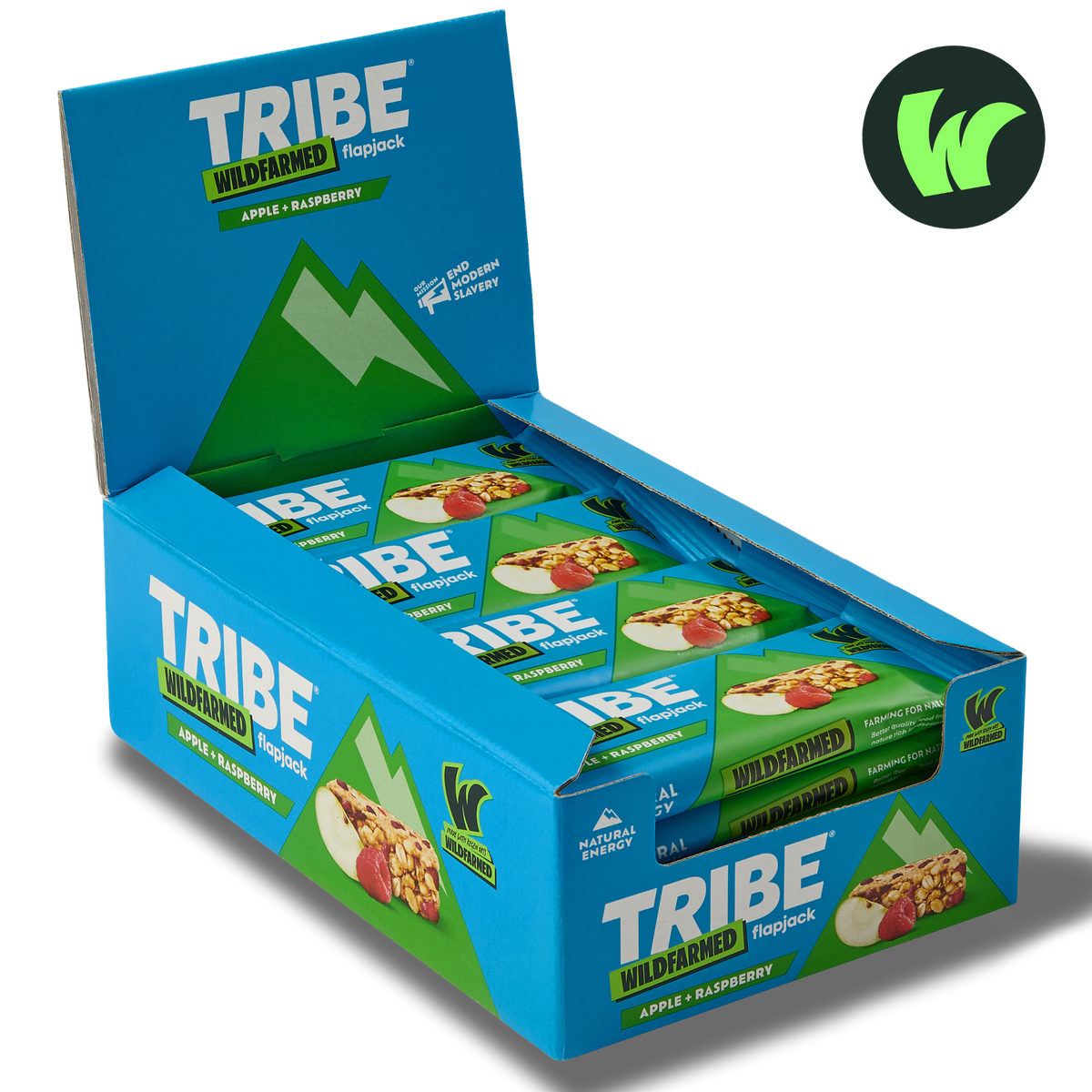
Before training, real food works. TRIBE x Wildfarmed Flapjacks give you around 30g of natural carbohydrate from regeneratively farmed Wildfarmed oats in a soft 50g bar - simple fuel for a run or a session, with no stimulant needed to get you out of the door.

Protect Your Sleep
This is the big one. Keep bedtimes and wake times roughly consistent, and if you drink caffeine, keep it to the earlier part of the day. Given that caffeine 6 hours before bed measurably shortened sleep in the Drake study [9], a mid-afternoon cut-off is a sensible place to start.
The Bottom Line
Caffeine is fine for most adults in moderation [8]. But it doesn't create energy. It blocks the tiredness signal for a few hours [1], it can cut into your sleep long after the lift has faded [9], and regular use builds tolerance [1]. Sustained energy comes from slow-release carbohydrate, fibre, protein, the vitamins and minerals that help your body use them, daylight, movement and sleep. That's what we chose to build on. Natural Energy. Nothing Else.
Every TRIBE product purchased donates 1p to the TRIBE Freedom Foundation - over £2.4 million raised to date.
Frequently Asked Questions
Q: Is caffeine bad for you?
A: Not for most healthy adults in moderation. EFSA considers up to 400mg a day from all sources, and single doses up to 200mg, to raise no safety concerns for healthy adults [8]. The issues are timing, total intake and what it does to your sleep.
Q: Why do I feel tired when caffeine wears off?
A: Caffeine blocks adenosine, the molecule behind sleep pressure, rather than removing it. While caffeine is working, adenosine keeps building, so as the caffeine clears, the tiredness that was there all along becomes noticeable again [1].
Q: How long does caffeine stay in your system?
A: The average half-life is around five hours, with wide variation between people [1]. In one study, 400mg taken 6 hours before bed still reduced total sleep by more than an hour [9].
Q: How much caffeine is safe during pregnancy?
A: EFSA advises that intakes of up to 200mg a day from all sources don't raise safety concerns for the unborn child [8]. If you're pregnant, check with your midwife or GP.
Q: What are the symptoms of caffeine withdrawal?
A: Headache and fatigue are the most common [1]. Cutting down gradually rather than stopping overnight makes the change easier.
Q: How do TRIBE bars support focus without caffeine?
A: Protein + Focus contains vitamin B6 and magnesium, which contribute to normal psychological function and the reduction of tiredness and fatigue [4, 10], alongside slow-release oats, fibre and 10g of plant protein, plus 100mg each of Panax ginseng and lion's mane extract. No stimulants anywhere in the bar.
References: [1] Fredholm BB, Battig K, Holmen J, Nehlig A, Zvartau EE. Actions of caffeine in the brain with special reference to factors that contribute to its widespread use. Pharmacological Reviews. 1999;51(1):83-133. [2] Moisey LL, Kacker S, Bickerton AC, Robinson LE, Graham TE. Caffeinated coffee consumption impairs blood glucose homeostasis in response to high and low glycemic index meals in healthy men. American Journal of Clinical Nutrition. 2008;87(5):1254-1261. [3] Tardy AL, Pouteau E, Marquez D, Yilmaz C, Scholey A. Vitamins and Minerals for Energy, Fatigue and Cognition: A Narrative Review of the Biochemical and Clinical Evidence. Nutrients. 2020;12(1):228. [4] EFSA NDA Panel. Scientific Opinion on the substantiation of health claims related to vitamin B6 pursuant to Article 13(1) of Regulation (EC) No 1924/2006. EFSA Journal. 2010;8(10):1759. [5] Jin TY, Rong PQ, Liang HY, Zhang PP, Zheng GQ, Lin Y. Clinical and Preclinical Systematic Review of Panax ginseng C. A. Mey and Its Compounds for Fatigue. Frontiers in Pharmacology. 2020;11:1031. [6] Mori K, Obara Y, Moriya T, Inatomi S, Nakahata N. Effects of Hericium erinaceus on amyloid beta(25-35) peptide-induced learning and memory deficits in mice. Biomedical Research. 2011;32(1):67-72. [7] Docherty S, Doughty FL, Smith EF. The Acute and Chronic Effects of Lion's Mane Mushroom Supplementation on Cognitive Function, Stress and Mood in Young Adults: A Double-Blind, Parallel Groups, Pilot Study. Nutrients. 2023;15(22):4842. [8] EFSA NDA Panel. Scientific Opinion on the safety of caffeine. EFSA Journal. 2015;13(5):4102. [9] Drake C, Roehrs T, Shambroom J, Roth T. Caffeine effects on sleep taken 0, 3, or 6 hours before going to bed. Journal of Clinical Sleep Medicine. 2013;9(11):1195-1200. [10] Commission Regulation (EU) No 432/2012 establishing a list of permitted health claims made on foods (as retained in UK law).