Natural Energy. Nothing Else. Fibre is one of the plainest examples of that principle at work: an unglamorous nutrient doing more for your digestive system, your heart, your blood sugar and even your brain than almost anything else on a label. It's also the nutrient the UK is worst at eating. This guide covers what fibre is, what it actually does in your body, what the research says about its long-term benefits, and how to close the gap without overhauling your life. For the wider picture on TRIBE's approach to natural ingredients, start with our Nutrition Hub.
Start with the gap. UK adults are advised to eat 30g of fibre a day [11], yet 96% of women and 87% of men fall short, with average intakes closer to 17-21g [1]. Not a marginal miss. A near-universal one.

What Is Dietary Fibre?
Dietary fibre is the part of plant foods your own digestive enzymes can't break down. Instead of being absorbed in the small intestine like sugars, fats and proteins, it travels on to the large intestine more or less intact. That's where most of its work gets done. Fibre isn't one thing - it's a family, and the members do different jobs.
Soluble Fibre
Soluble fibre dissolves in water to form a gel. Found in oats, barley, beans, lentils, apples and citrus, it slows how quickly food leaves the stomach and how quickly sugar reaches the bloodstream. Oat and barley beta-glucan is the best-studied example: it's one of the few fibres with an authorised health claim, contributing to the maintenance of normal blood cholesterol levels at 3g a day [8].
Insoluble Fibre
Insoluble fibre doesn't dissolve. Wholegrains, wheat bran, nuts, seeds and the skins of fruit and vegetables are rich in it. It holds onto water and helps add bulk to stool, keeping things moving through your digestive system. Wheat bran fibre is authorised to contribute to faster intestinal transit, and oat, barley and wheat bran fibre to an increase in faecal bulk [8].
Fermentable Fibres and Resistant Starch
Some fibres, including inulin (from chicory root, onions, leeks and garlic), acacia fibre and the resistant starch in cooled potatoes, rice and slightly green bananas, are fermented by the bacteria in your large intestine. These are often called prebiotic fibres. Chicory inulin, for example, carries an authorised claim for contributing to normal bowel function by increasing stool frequency, at 12g a day [12]. It's this fermentation that links fibre to some of its most interesting effects.
Fibre, Your Gut Microbiome and Your Digestive System
Your large intestine is home to trillions of bacteria, and fibre is food for gut bacteria in the most literal sense: the carbohydrates your body can't digest, they can. As they ferment fibre, they produce short-chain fatty acids - mainly acetate, propionate and butyrate. Butyrate is the main fuel for the cells lining your colon and helps maintain the integrity of the gut barrier [4].
A 2022 systematic review of 44 studies in healthy adults found that increasing dietary fibre reliably reshapes the composition of the gut microbiota, even where effects on measured short-chain fatty acid levels varied from study to study [3]. Different fibres feed different microbes, which is the real case for variety: oats, beans, onions, leeks, bananas, nuts and wholegrains all bring something slightly different to the table.

This is the thinking behind TRIBE Protein Superblend. Its fibre comes from inulin and acacia fibre - exactly the fermentable kind your gut bacteria feed on - alongside 1.5 billion CFU of ActiBio® live cultures, a five-enzyme digestive blend and 20g of plant protein. It's an easy way to add fermentable fibre to breakfast or a post-training shake, alongside the whole foods that make up the rest of your 30g.
The Gut-Brain Axis: How Fibre Talks to Your Brain
This is one of the fastest-moving areas in nutrition science. Your gut and brain are in constant two-way communication through the vagus nerve, the immune system and hormones - a network researchers call the microbiota-gut-brain axis [5]. The bacteria you feed with fibre are part of that conversation.
The short-chain fatty acids produced when fibre is fermented can influence this axis in several ways: by stimulating the release of gut hormones such as GLP-1 and PYY, by modulating immune signalling and inflammation, and by acting on the vagus nerve [4]. Gut microbes also influence the production of serotonin in the gut, where the large majority of the body's serotonin is made [5].
An honest caveat: much of this evidence comes from animal studies, and human research is still early [4, 5]. No food can claim to change your mood through your microbiome. But the direction of travel is clear, and it's one more reason a fibre-rich diet matters for more than digestion. On the brain side, the nutrients with authorised claims are vitamin B6 and magnesium, which contribute to normal psychological function [8] - more on that in What's Actually Causing Your Afternoon Brain Fog?
Fibre and Long-Term Health: What the Research Shows
The biggest single body of evidence on fibre is a 2019 series of systematic reviews and meta-analyses commissioned by the World Health Organization and published in The Lancet. Pooling 185 prospective studies and 58 clinical trials, researchers found that people eating the most fibre had a 15-30% lower risk of death from any cause and from cardiovascular disease than those eating the least, along with lower incidence of coronary heart disease, stroke, type 2 diabetes and colorectal cancer [2]. The greatest benefits were seen at 25-29g a day or more [2] - right around the UK's 30g target, and well above what most people actually eat [1].
A Lower Risk of Heart Disease
A BMJ meta-analysis found that every additional 7g of fibre a day was associated with a 9% lower risk of cardiovascular disease and coronary heart disease [6]. In the Lancet trials, higher fibre intakes also lowered systolic blood pressure and total cholesterol [2]. That adds up to a lower risk of heart disease over time from something as simple as oats at breakfast and beans at dinner.
Bowel Cancer and Colon Health
Bowel cancer is one of the most common cancers in the UK, and fibre is one of the most consistent dietary factors linked to lower risk. A BMJ dose-response meta-analysis of prospective studies found a 10% lower risk of colorectal cancer for every 10g of fibre eaten per day, with cereal fibre and wholegrains showing the strongest associations [7]. The likely mechanisms tie back to the gut: more bulk and faster transit mean less contact time between the colon lining and potential carcinogens, and butyrate helps keep colon cells healthy [4, 7].
Type 2 Diabetes and Blood Sugar
Higher fibre intake is linked to a lower incidence of type 2 diabetes [2]. The everyday version of that effect is something you can feel. Soluble fibre slows the rate glucose enters your bloodstream, which blunts the spike-then-crash cycle behind the 3pm slump - the same crash covered in Why No Caffeine Is the Better Choice for Sustained Energy.
Fibre for Sustained Energy
This is where fibre meets natural energy. A snack that's mostly fast sugar gives you a quick lift and a quick drop. Pair carbohydrate with fibre and protein, and the same energy is released more gradually. That's exactly why we built TRIBE Protein + Focus the way we did.

The Choc Brownie and Peanut Butter flavours carry 7-8g of fibre per bar - around a quarter of your 30g daily target in one snack - from gluten-free oats and chicory root fibre, alongside 10g of plant protein. Each bar also contains eight B vitamins and 56.25mg of magnesium, which contribute to normal energy-yielding metabolism and the reduction of tiredness and fatigue [8]. Zero caffeine, so there's nothing to crash from. It's the snack we reach for when lunch is late and the afternoon is long.
Fibre and Weight Loss: Why It Keeps You Fuller
Fibre isn't a shortcut, but it does make appetite easier to manage. High-fibre foods take longer to chew, slow the rate your stomach empties and add volume without many calories, so meals built around them tend to keep you satisfied for longer. The short-chain fatty acids produced when fibre is fermented also stimulate GLP-1 and PYY, two hormones involved in feeling full [4]. In the clinical trials reviewed in The Lancet, higher fibre intakes were associated with modestly lower body weight [2]. The practical takeaway: fibre makes it easier to eat well - it doesn't replace eating well.
Fibre, Constipation and IBS
How Fibre Helps Prevent Constipation
Bulk and water are the mechanism behind fibre's best-known job. Insoluble fibre holds water in the stool, making it larger and softer [8], and chicory inulin has been shown to increase stool frequency [12]. Together with enough fluid and regular movement, a fibre-rich diet is the first-line approach to help prevent constipation. Increase gradually - a sudden jump can cause bloating and wind while your gut bacteria adjust.
Irritable Bowel Syndrome: A More Specific Approach
If you have irritable bowel syndrome (IBS), fibre advice gets more specific. NICE guidance recommends reviewing fibre intake and, where more is needed, favouring soluble fibre such as oats or ispaghula over insoluble fibre such as bran, which can make symptoms worse for some people [9]. If you're managing IBS, speak to your GP or a registered dietitian before making big changes.
How to Get More Fibre in Your Diet
Getting to 30g isn't about a single "superfood". It's a plate that leans wholegrain and plant-forward most of the time. A simple day might look like porridge with berries and seeds at breakfast (8-10g), a wholemeal wrap with beans or lentils at lunch (8-10g), a high-fibre snack in the afternoon (5-8g), and a dinner with two portions of vegetables and potatoes with the skins on (8-10g).
The Best High-Fibre Foods
Real, everyday sources: oats and barley, lentils, chickpeas and beans, wholemeal bread and pasta, brown rice, berries, pears and apples with the skin on, broccoli, carrots and other vegetables, nuts and seeds, and potatoes with their skins.

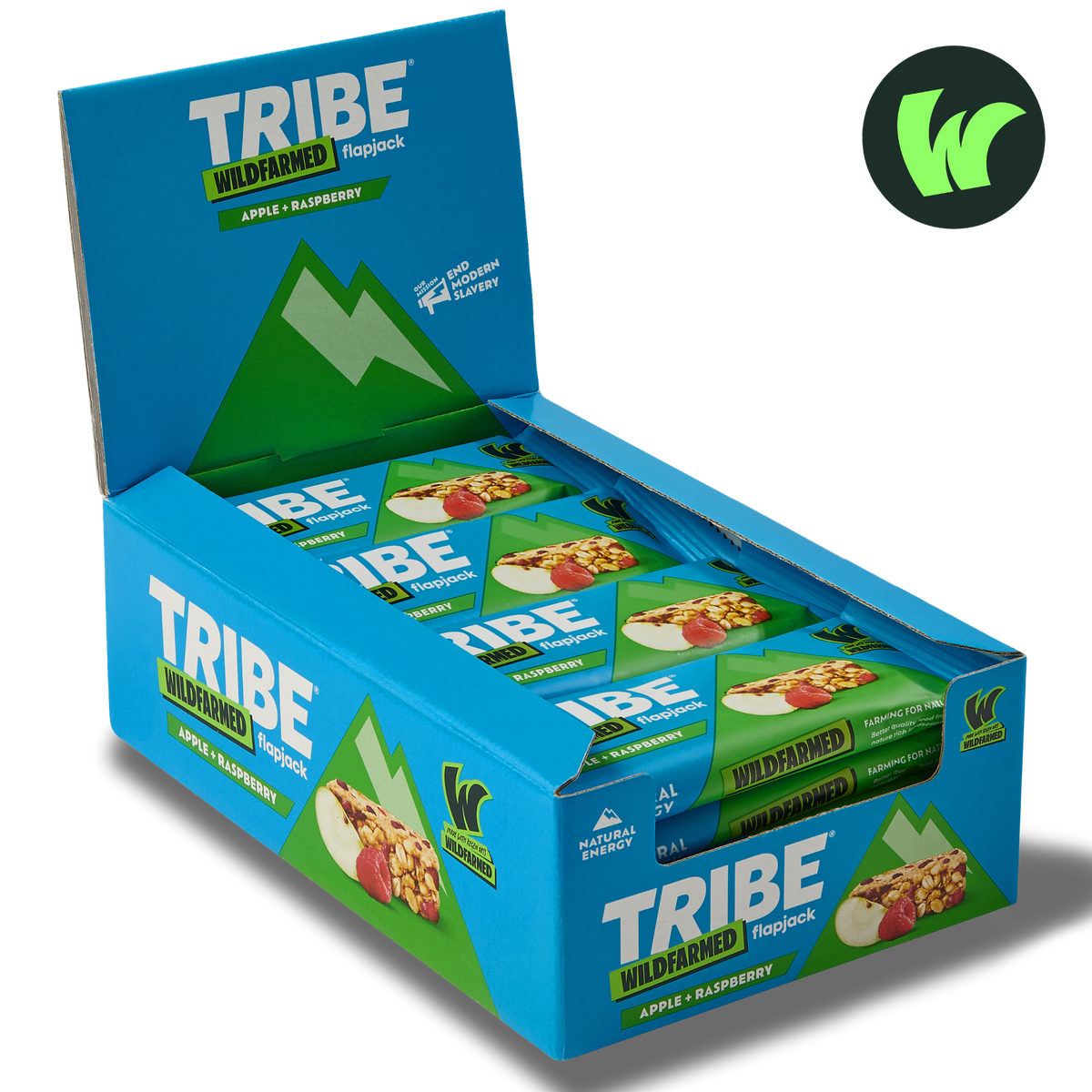
Oats deserve their own mention. They're rich in beta-glucan, easy to eat at any time of day, and the base of almost everything TRIBE makes. Our TRIBE x Wildfarmed Flapjacks are made with regeneratively farmed Wildfarmed oats - soft, chewy, made for the trail, and an easy way to swap a refined snack for a wholegrain one. If you want more fibre per bar, TRIBE Protein Flapjacks carry 6g or more per 50g bar.
Read the Nutrition Label
Check the nutrition label on packaged foods for fibre per 100g. In the UK, a food can only claim to be a "source of fibre" if it contains at least 3g per 100g (or 1.5g per 100kcal), and "high fibre" at 6g per 100g (or 3g per 100kcal) [10]. It's a quick way to cut through front-of-pack marketing.
Build Up Gradually and Drink Water
Add fibre a little at a time over a couple of weeks and drink more as you go - fibre works best when it has water to hold onto. Swapping white bread for wholemeal, adding a handful of beans to a stew and keeping a high-fibre snack in your bag are the kind of changes that stick.
The Bottom Line
Fibre is unglamorous, underrated and under-eaten by almost everyone in the UK [1]. It keeps things moving, acts as food for gut bacteria that help keep your gut healthy [3, 4], is part of the conversation between your gut and brain [5], and higher intakes are consistently linked to lower rates of cardiovascular disease, diabetes and colorectal cancer [2, 6, 7]. Not a supplement trend. Real food, done consistently. Natural Energy. Nothing Else.
Every TRIBE product purchased donates 1p to the TRIBE Freedom Foundation - over £2.4 million raised to date.
Frequently Asked Questions
Q: How much fibre should I eat a day?
A: 30g a day for UK adults [11]. Average intake sits closer to 17-21g, and 96% of women and 87% of men fall short [1].
Q: What's the difference between soluble and insoluble fibre?
A: Soluble fibre (oats, beans, fruit) forms a gel that slows sugar absorption and helps manage cholesterol. Insoluble fibre (wholegrains, bran, skins) adds bulk and keeps things moving. Most high-fibre foods contain both, and you need both.
Q: Does fibre affect your mood or brain?
A: Possibly, through the gut-brain axis. Short-chain fatty acids made when gut bacteria ferment fibre can influence gut hormones, immune signalling and the vagus nerve [4, 5]. Most of the evidence is from animal studies so far, so treat it as promising rather than proven.
Q: Can fibre reduce colon cancer risk?
A: Higher fibre intakes are consistently associated with lower risk. One BMJ meta-analysis found a 10% lower risk of colorectal cancer for every extra 10g of fibre a day [7]. That's an association across populations, not a guarantee for an individual.
Q: Can too much fibre cause problems?
A: Ramping up too quickly can cause bloating or discomfort. The fix is to increase gradually and drink enough water, not to avoid fibre. Most people in the UK are dealing with the opposite problem [1].
Q: Where does the fibre in TRIBE bars come from?
A: Protein + Focus Choc Brownie and Peanut Butter flavours get their 7-8g of fibre from gluten-free oats and chicory root fibre. Protein Superblend uses inulin and acacia fibre, and our Wildfarmed flapjacks use regeneratively farmed whole oats.
Q: Which TRIBE product has the most fibre?
A: Protein + Focus in Choc Brownie or Peanut Butter, at 7-8g per bar - around a quarter of your daily 30g.
References: [1] Evans CE. Dietary fibre and cardiovascular health. Proceedings of the Nutrition Society. 2020;79(1):61-67. [2] Reynolds A, Mann J, Cummings J, Winter N, Mete E, Te Morenga L. Carbohydrate quality and human health: a series of systematic reviews and meta-analyses. The Lancet. 2019;393(10170):434-445. [3] Vinelli V, Biscotti P, Martini D, et al. Effects of Dietary Fibers on Short-Chain Fatty Acids and Gut Microbiota Composition in Healthy Adults: A Systematic Review. Nutrients. 2022;14(13):2559. [4] Dalile B, Van Oudenhove L, Vervliet B, Verbeke K. The role of short-chain fatty acids in microbiota-gut-brain communication. Nature Reviews Gastroenterology & Hepatology. 2019;16(8):461-478. [5] Cryan JF, O'Riordan KJ, Cowan CSM, et al. The Microbiota-Gut-Brain Axis. Physiological Reviews. 2019;99(4):1877-2013. [6] Threapleton DE, Greenwood DC, Evans CEL, et al. Dietary fibre intake and risk of cardiovascular disease: systematic review and meta-analysis. BMJ. 2013;347:f6879. [7] Aune D, Chan DSM, Lau R, et al. Dietary fibre, whole grains, and risk of colorectal cancer: systematic review and dose-response meta-analysis of prospective studies. BMJ. 2011;343:d6617. [8] Commission Regulation (EU) No 432/2012 establishing a list of permitted health claims made on foods (as retained in UK law). [9] NICE. Irritable bowel syndrome in adults: diagnosis and management. Clinical guideline CG61. 2008, updated 2017. [10] Regulation (EC) No 1924/2006 on nutrition and health claims made on foods, Annex (as retained in UK law). [11] Scientific Advisory Committee on Nutrition. Carbohydrates and Health. 2015. [12] Commission Regulation (EU) 2015/2314 authorising a health claim made on foods relating to native chicory inulin (as retained in UK law).